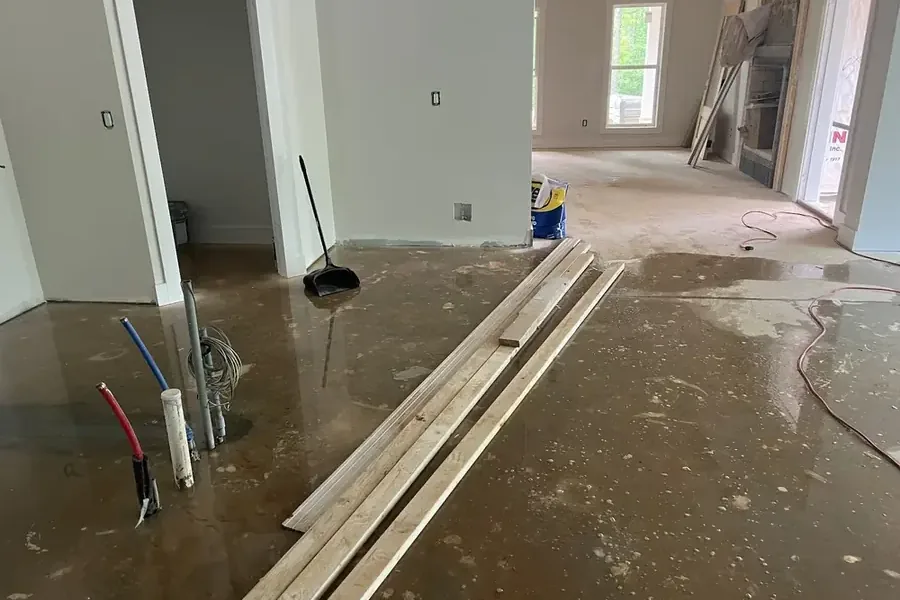
A pinhole leak is exactly what the name says, a hole about the size of a pin in a pipe wall. It can spray a fine mist inside a wall for days, and the damage ends up far bigger than the hole.
Key takeaways
- Copper pipe in older homes wears from the inside after decades of hard water and flow, and galvanized pipe corrodes in its own way.
- A pinhole often leaks inside a wall or above a ceiling, so the first sign is a stain, a smell or a bill, not a puddle.
- A fine spray can soak insulation and drywall long before anyone sees water.
- Shut off the water, outline the stain with a pencil and bring in a plumber and a drying team.
- One pinhole is often followed by another in the same old system, so a repipe is worth pricing.
How a pinhole forms inside a copper pipe
Copper looks permanent, but water wears it. Minerals in hard water settle inside the pipe as scale, and flow keeps scouring the metal beneath until a thin spot gives way.
Many postwar and 1960s to 1970s homes in central Brea still carry copper from the era they were built, and older houses can have galvanized pipe that rusts from the inside out.
The result is the same either way. A pinhole opens where the pipe wall is thinnest, usually at a bend or a joint.
Water pressure plays a part too. Pressure pushes harder on a weakened spot, so a pinhole can spray more water than its size suggests.
- Hard water that leaves mineral scale inside the pipe
- Fast flow that scours thin spots at bends and joints
- Hot water, which wears copper faster than cold
- Pressure that pushes harder on a weak spot
- Age, which stacks all of the above
Signs that a pinhole is leaking
Inside a wall
A wall leak is quiet. The first signs are often on the surface of the wall itself.
- Paint that bubbles, peels or looks stained near the floor
- A baseboard that swells or pulls away
- A damp or warm spot on the wall
- A hissing or ticking sound with every fixture off
Above a ceiling
A pinhole in an attic or ceiling cavity shows up as a brown stain that grows, or a patch of drywall that sags. Light fixtures in that spot are worth treating with caution, because water and wiring do not mix.
Why the damage is bigger than the hole
A pinhole under normal pressure throws a fine, steady mist. It wets whatever it faces, and insulation and drywall draw that moisture outward like a wick.
Left running, it can wet a wall cavity for a long stretch before any stain reaches the surface. By then the framing, the insulation and the back of the drywall are all damp.
When water has pooled on a floor or soaked carpet, water extraction comes before any drying, because standing water keeps feeding the material beneath it.
- Drywall softens and loses strength when it stays wet.
- Wet insulation clumps and stops insulating.
- Framing can hold moisture long after the surface dries.
- Moisture that lingers for more than 24 to 48 hours gives mold a place to start.
What to do when a stain appears
Stay calm and work through a short list. The aim is to stop the water and record what it did.
The pencil outline earns its keep. If the stain stays inside the mark for a day, the leak is slow.
If it grows past the mark, the leak is active and the water should stay off until the plumber has fixed it.
- Shut off the main water valve at the house.
- Outline the edge of the stain with a pencil and write the time beside it.
- Photograph the wall or ceiling and the water meter.
- Keep people away from a sagging ceiling and from light fixtures in a wet spot.
- Bring in a plumber to find the pipe and a drying team to check what is wet.
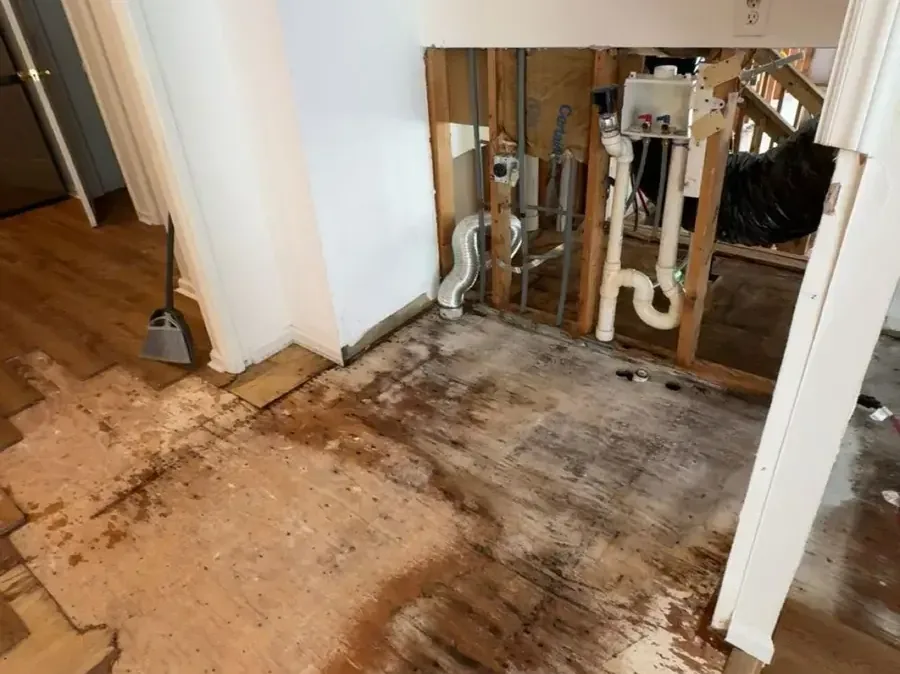
How the drying team handles a wall or ceiling leak
The pinhole leak water damage team starts with a moisture meter and a thermal camera. Those tools show where the water went, which is rarely where the stain is.
Then the crew opens only what has to open. Wet drywall and insulation come out, and the exposed framing is dried with air movers and dehumidifiers.
A wet ceiling gets the same treatment from the ceiling leak water damage side. Insulation above it is checked and replaced when it is soaked, and the cavity is dried before new drywall goes up.
Spot repair or repipe
A plumber can repair the one pinhole, and that is the usual first step. The catch is that the metal around it is the same age and the same condition.
Galvanized pipe wears differently. Rust builds up inside until flow drops, and leaks tend to appear at threaded joints.
Weak pressure at the faucets and rust colored water are the clues.
When copper has worn from the inside, another thin spot is often already forming somewhere else. That is why a repipe is worth pricing after a second leak, or after the first one if the pipe looks rough inside.
Whatever the plumber does, the walls stay open until the structural drying readings say they are dry. Closing a wall too early traps moisture behind fresh paint.
A short routine to catch pinholes early
Pinholes do the most damage when they run unseen. A short routine now and then can shorten that stretch.
- Read the water meter with every fixture off, then read it again later in the day.
- Look under sinks and around the water heater for green or white crust on copper fittings.
- Watch for rust colored water at the tap, which can point to corroding pipe.
- Check the water bill for a rise that nothing explains.
- Press a finger on wall bottoms and ceiling corners in rooms with plumbing above or behind them.
Questions
What causes a pinhole leak in copper pipe?
Decades of flow and mineral scale from hard water wear the inside of the pipe until a thin spot opens. Bends and joints tend to go first.
Can I see a pinhole leak?
Usually not at first. Inside a wall or above a ceiling the signs are a stain, a swollen baseboard, a hissing sound or a higher water bill.
How much water can a pinhole release?
Less than a burst pipe at any moment, but it can run for days. A fine, steady spray wets framing, insulation and drywall over time.
Does one pinhole mean the whole system is failing?
Not always, but it is a warning. Pipe of the same age and wear can develop more thin spots, so a plumber may suggest checking or replacing more of it.
Do the walls have to be opened?
Only the wet parts. The team follows moisture readings and opens just what is saturated, then closes up once the framing reaches a dry reference.
Is a pinhole leak an emergency?
Water keeps flowing, so treat it as one. Shut off the main valve first, then bring in a plumber and a drying team. A small hole can wet a lot of material while you decide.