Hardwood Floor Water Damage in Brea, CA
Wood floors soak up water fast and start to cup within days. The drying team uses floor drying mats and dehumidifiers to pull water out of the boards while they can still be saved.
(888) 563-9619Wood floor cupping? Call the drying team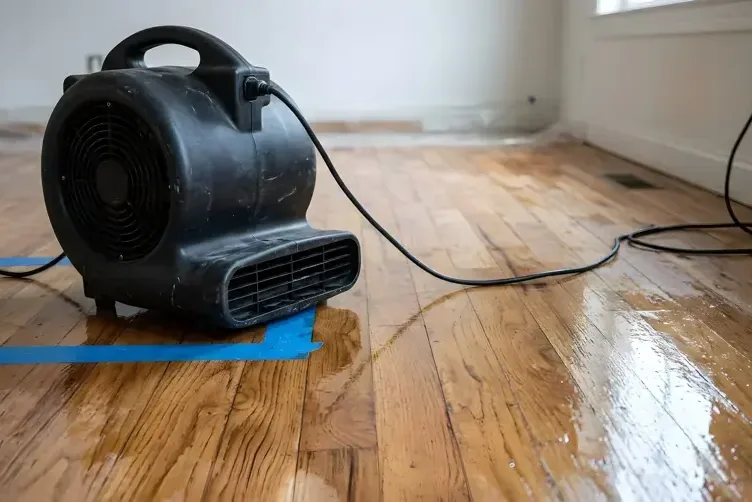
First moves when hardwood floor water damage starts
- Stop the water
Close the main shutoff or the valve at the source.
- Pull water off the surface
Towel or squeegee standing water off the boards, and skip the steam mop.
- Clear the floor
Move rugs and furniture off the wet wood.
- Keep the heat steady
Avoid cranking the heat or pointing fans at the floor; uneven drying can split boards.
How the crew handles hardwood floor water damage
Readings set the plan
The tech who does the walkthrough reads the boards and the subfloor or slab underneath, then compares them with dry wood in another room.
Mats where boards can be saved
The drying team sets floor drying mats over cupped areas that still sit flat to the subfloor, with dehumidifiers holding the room dry.
Lifting what cannot be saved
The crew removes buckled boards and laminate so the subfloor or slab can dry.
Patience before sanding
The mitigation team logs readings until the wood and subfloor match a dry reference, so refinishing does not lock in moisture.
What does hardwood floor water damage cost in Brea, CA?
Hardwood floor water damage drying typically runs $1,200 to $6,000, depending on the area of flooring, solid or engineered boards, whether the floor sits on a slab or plywood and how long it was wet; refinishing is separate.
One room
- Floor drying mats
- Wood meter readings
- Dehumidifier
Several rooms
- Mats in sections
- Desiccant drying
- Baseboards removed
Floor over a wet slab
- Slab and wood dried together
- Some boards lifted
- Extended monitoring
Typical ranges, not a quote. The water damage cost calculator gives a planning figure; the firm number follows the on-site moisture map.
Solid and engineered hardwood are common in remodeled homes here, glued or nailed over a concrete slab or plywood. Water gets between the boards and under them, the bottom of each board swells, and the edges rise into a cup.
Cupping, crowning and buckling
- Cupping: edges higher than the center, from wet undersides
- Crowning: center higher, often after sanding too early
- Buckling: boards lifting off the subfloor, usually a replacement
- Gaps and stains after a floor dries too fast or too slowly
How floor drying mats work
Floor drying mats seal against the surface and draw air and water up through the gaps between boards, while LGR or desiccant dehumidifiers keep the room dry. The drying team reads the wood with a meter made for hardwood and compares it with dry flooring elsewhere in the house.
The USDA Forest Products Laboratory publishes research on how wood takes on and releases moisture, and EPA guidance explains why wet materials should dry within 24 to 48 hours.
Save or replace
Clean water caught early gives a wood floor the best chance. Boards soaked by Category 2 or 3 water, laminate, and floors that buckle or stay wet for weeks usually get replaced. Refinishing waits until the boards and the subfloor or slab underneath read dry.
The hardwood floor water damage process, start to finish
- 1
Read the wood
The tech measures boards and subfloor against dry flooring.
- 2
Extract and mat
The crew extracts surface water and seals mats over wet sections.
- 3
Dehumidify
The drying team runs LGR or desiccant dehumidifiers around the clock.
- 4
Confirm dry
The mitigation team confirms readings before any sanding.
Hardwood Floor Water Damage across Brea and nearby towns
The restoration crew covers ZIP codes 92821, 92822 and 92823, from Birch Street downtown and the central tracts out to Olinda Ranch, Blackstone, La Floresta and the homes along Carbon Canyon Road.
Coverage also reaches Fullerton, La Habra, La Habra Heights, Placentia, Yorba Linda, Diamond Bar, Chino Hills and Rowland Heights.
Every neighborhood and ZIP in the service areaHardwood Floor Water Damage questions
Can cupped hardwood flatten again?
Often, if it is dried properly and early. Many cupped floors settle back as the undersides dry, and any remaining unevenness is handled when the floor is refinished.
Should the floor be sanded right away?
No. Sanding a floor that is still wet underneath leads to crowning later. Refinishing waits until readings say the boards and subfloor are dry.
Is engineered wood different?
Engineered boards have a thin wood layer over plywood and can delaminate when soaked. Some dry well; others need replacing.
Why not just run fans?
Fans dry the surface faster than the underside, which can make cupping worse. Floor mats pull water from below while dehumidifiers dry the air.
Is wet hardwood covered by insurance?
When the water loss is covered, drying and sometimes replacement of the flooring are part of the claim. Coverage depends on your policy, so check with your own insurer.
How long does hardwood take to dry?
Usually four to ten days with floor mats, and longer over a wet slab. The drying team goes by readings.
Water on a hardwood floor?
The drying team extracts the surface, sets floor drying mats and dehumidifiers and tracks the wood until it reads dry.