Burst Pipe Water Damage in Brea, CA
A split supply pipe or a failed fitting can put hundreds of gallons into a house in an hour. The extraction crew removes the water, then the drying team dries walls, ceilings and floors to a measured goal.
(888) 563-9619Pipe burst? Get the water out now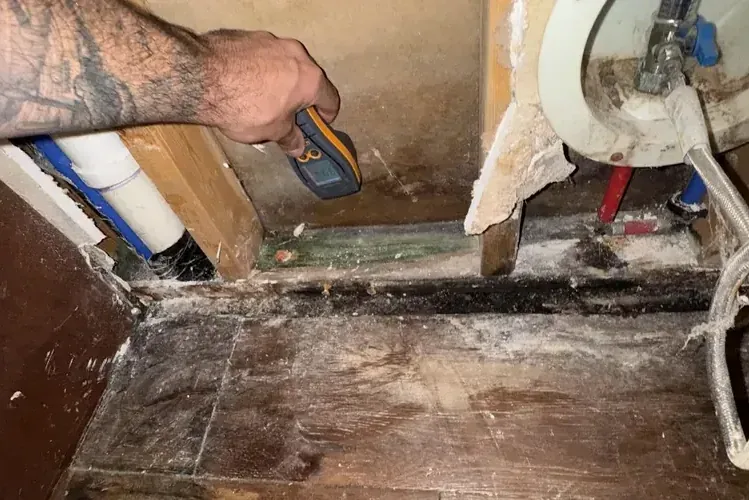
First moves when burst pipe water damage starts
- Close the main shutoff
Find it beside the front hose bib, in the garage or at the curb meter box.
- Open a faucet low in the house
Draining the system takes pressure off the break.
- Stay clear of wet ceilings
Keep people out from under sagging drywall and switch off power to wet rooms if the panel is dry.
- Photograph, then call
Shoot the break and every wet room, then call for extraction.
How the crew handles burst pipe water damage
Water out before anything else
The extraction crew removes standing water first, because every gallon left behind keeps soaking into pad, drywall and framing.
Ceilings checked from below
The mitigation team reads the ceiling under the break with meters and drains or removes sagging drywall safely.
Walls dried in place where possible
With clean water caught early, the drying team often dries wall cavities through small openings instead of a full tear-out.
A claim file that tracks the break
The tech who does the walkthrough photographs the failed pipe and keeps the moisture map and daily readings for the adjuster.
What does burst pipe water damage cost in Brea, CA?
Burst pipe water damage cleanup typically runs $1,500 to $12,000 or more, depending on how much water escaped, how many rooms and levels it reached, whether ceilings came down and how fast drying started.
One room, caught fast
- Extraction
- Baseboard and pad checks
- Air movers and dehumidifier
Several rooms or a ceiling
- Ceiling drywall removed
- Wall cavities dried
- Contents moved
Two levels soaked
- Upstairs and downstairs drying
- Insulation removal
- Daily psychrometric logs
Typical ranges, not a quote. The water damage cost calculator gives a planning figure; the firm number follows the on-site moisture map.
A burst is different from a slow leak. A pipe that splits, a fitting that blows off or a supply hose that fails under pressure releases water fast, and it runs through walls, down light fixtures and across several rooms before anyone reaches the shutoff.
Common causes in local homes
- Failed fittings and push connectors from past remodels
- Pipes stressed by high water pressure without a working regulator
- Old galvanized pipe that rusts through at a joint
- Pipes knocked loose during work or by earthquake shaking
What happens in the first hours
The extraction crew pulls standing water with truck-mounted units, then the mitigation team checks the ceilings below and the walls around the break for trapped water. The crew drains sagging ceiling drywall in a controlled way and takes it down before it falls.
Knowing where the main shutoff is saves the most damage; Ready.gov earthquake preparedness covers shutting off water after a quake, and the California Department of Insurance explains how water damage claims are filed.
Drying after a burst
Burst pipe losses usually reach Class 2 or 3: carpet, pad, the bottom of the walls and sometimes the ceiling. The drying team sets air movers to each room's load, runs LGR dehumidifiers and uses cavity drying where walls stay closed, logging readings daily. Hidden copper problems often show up next as pinhole leaks.
The burst pipe water damage process, start to finish
- 1
Stop and extract
The crew confirms the shutoff and removes standing water.
- 2
Map every level
The tech checks floors, walls and ceilings around the break with meters.
- 3
Remove and set
The mitigation team removes ruined materials and sets air movers and dehumidifiers.
- 4
Dry and verify
The drying team logs readings daily until framing matches a dry reference.
Burst Pipe Water Damage across Brea and nearby towns
The restoration crew covers ZIP codes 92821, 92822 and 92823, from Birch Street downtown and the central tracts out to Olinda Ranch, Blackstone, La Floresta and the homes along Carbon Canyon Road.
Coverage also reaches Fullerton, La Habra, La Habra Heights, Placentia, Yorba Linda, Diamond Bar, Chino Hills and Rowland Heights.
Every neighborhood and ZIP in the service areaBurst Pipe Water Damage questions
What should I do the moment a pipe bursts?
Close the main shutoff, open a low faucet to relieve pressure, keep people out from under wet ceilings and switch off power to wet rooms only if the panel is dry. Then photograph the damage and call.
Will the ceiling have to come down?
Not always. Ceiling drywall that sags, bulges or reads saturated over a large area usually comes down; small wet areas can often be dried in place.
How long does drying take after a burst pipe?
Most burst pipe losses dry in three to five days once extraction is done. Hardwood, plaster and two-level losses take longer.
Is a burst pipe covered by homeowners insurance?
Sudden and accidental pipe bursts are commonly covered after the deductible. Coverage depends on your policy, so check with your own insurer.
Can contents be saved?
Most furniture and boxed items can be moved, dried or cleaned if they come off the wet floor quickly. The crew documents anything that cannot be saved for the claim.
How is a burst pipe different from a pinhole leak?
A burst releases a lot of water quickly and spreads across rooms. A pinhole leak releases a little water for a long time, mostly inside one wall or ceiling.
Pipe burst and water spreading?
The extraction crew pulls the water out, the drying team dries walls, ceilings and floors to the IICRC S500 standard, and the claim file starts with the first photo.