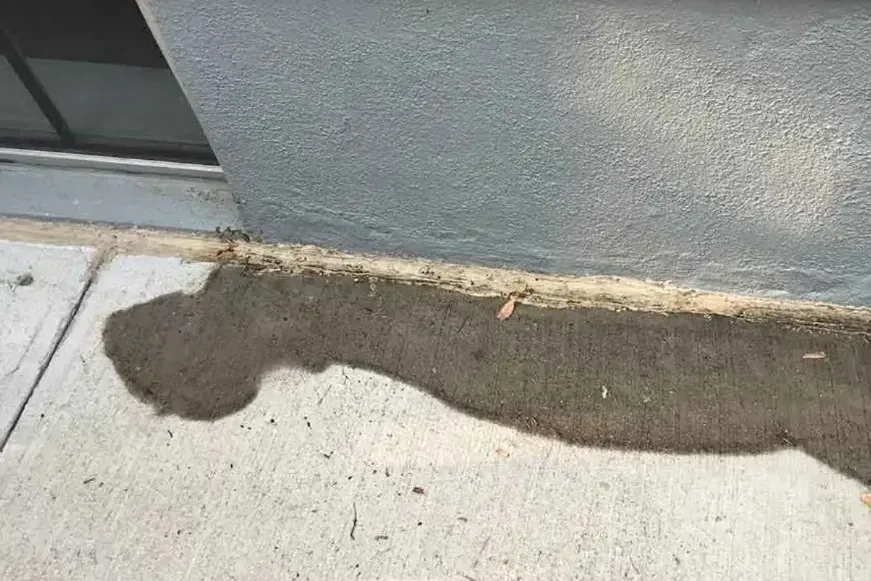
Many tract homes in central and west Brea sit on a concrete slab, with no basement below and the plumbing running through or under the concrete. When a hot water pipe in that slab starts to leak, the water has only two ways to go: up into the flooring or sideways under the walls.
Key takeaways
- A slab leak is a leaking pipe in or under the concrete floor, and hot water pipes are the usual suspects in older tract homes.
- Warm spots, damp carpet along a wall, swelling laminate and a meter that keeps moving with every fixture off are the common signs.
- Close the main shutoff valve first, then bring in a plumber to find the pipe and a restoration team to dry what the water reached.
- Concrete holds water and lets it go slowly, so the drying team works from moisture readings instead of a guess.
- New flooring goes down only after the slab reads dry, or leftover moisture gets sealed in.
Why slab leaks happen in Brea tract homes
Central and west Brea grew with postwar and 1960s to 1970s tract homes, and most of them were built slab on grade. That means a concrete floor poured at ground level, with no basement underneath.
The pipes that feed the water heater, the bathrooms and the kitchen often run through or under that concrete, so a leak starts out of sight.
Hot water pipes are the usual culprits. Copper that has carried heated water for decades wears from the inside, and a pinhole or a failed joint can leak for a long stretch before anything shows.
The water rarely stays where it starts. It follows the easiest path, which is often up through a crack or along the edge where the slab meets a wall.
A slab floor also hides a second problem. With no basement or crawl space below, there is nowhere for a drip to show up as a puddle or a wet joist, so the water has to travel through the flooring before anyone sees it.
Signs of a leak under the floor
What shows up inside the house
The first signs are small, and many owners explain them away for weeks.
- A warm spot on tile, hardwood or carpet, often in a hallway or near the water heater
- A damp edge of carpet along a baseboard
- Laminate or hardwood that starts to swell, lift or cup
- A musty smell near the bottom of a wall
- The sound of running water when every fixture is off
What shows up at the meter and on the bill
Turn off every faucet, appliance and ice maker, then watch the dial on the water meter. If it keeps turning, water is leaving the pipes somewhere.
A water bill that jumps with no change in habits points the same way. So does a water heater that seems to run all the time, because it keeps heating fresh water to replace what escapes.
The first hours after a leak is found
Closing the main shutoff valve comes first, because it stops the pipe from feeding the slab. After that, the order matters less than moving fast on all of it.
A restoration team can start water extraction and moisture mapping while the plumber works, so neither job waits on the other.
- Close the main shutoff valve at the house.
- Lift small rugs, shoes and boxes off wet flooring.
- Photograph the damp spots and the meter dial before anything is moved.
- Keep people and pets off wet floors near outlets and appliances.
- Bring in a plumber to find the pipe and a restoration team to start drying.
Plumber first, then the drying
Finding and fixing the pipe
A plumber locates the leak by listening, pressure testing and tracing the wet path. From there the repair usually goes one of two ways.
- A spot repair opens the concrete right over the leak, fixes the pipe and patches the slab.
- Rerouting runs a new pipe through the attic or walls and leaves the slab alone.
Mapping and drying the concrete
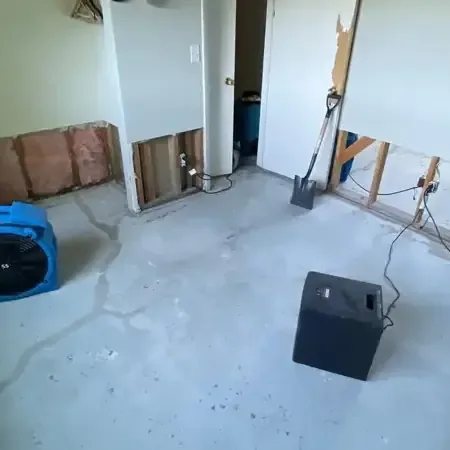
The mitigation team maps the wet zone with moisture meters and thermal imaging, since water travels well past the leak itself. Wet pad, laminate and baseboards come up so the concrete can breathe.
Dehumidifiers and air movers then run on the exposed slab and the bottoms of nearby walls. When the slab holds a lot of water, desiccant units go in as well.
The slab leak water damage work follows the same order every time: map, lift, dry, verify.
Why concrete takes longer to dry
Concrete soaks up water like a dense sponge and gives it back slowly. A floor can feel dry on top while the slab underneath is still loaded, so touch tells very little.
That is why the structural drying crew goes by numbers, not by feel. Water left in a slab and in wall bottoms is also the reason the first 24 to 48 hours matter, since mold can start to grow in that window.
- Readings are taken on the slab and on wall bottoms, not just the surface.
- Equipment keeps running until the readings match a dry reference.
- Closed doors and sealed rooms help, because dehumidifiers work best in a contained space.
- New flooring waits until the slab reads dry, so no moisture gets trapped under it.
What can be saved and what usually cannot
Water from a supply pipe starts out clean, which gives flooring a better chance than storm water or sewage would. How long it sat is what changes the outcome.
Boards that cup are not always lost. Floor drying mats can pull moisture out of a hardwood floor, and the hardwood floor water damage team starts by checking how far the wet reached.
- Carpet can often be lifted, dried and set back down, but the pad beneath it is normally replaced.
- Tile and stone usually survive, though the grout joints and the slab under them still have to dry.
- Laminate swells at the seams and is rarely worth saving.
- Baseboards and the lower edge of drywall are removed when readings stay high.
Catching a slab leak early
A slab leak does the most harm when it runs unnoticed. A few habits shorten that stretch.
- Check the meter dial with everything off once in a while.
- Glance at the water bill for jumps that nothing explains.
- Walk the house barefoot now and then and feel for a warm patch.
- Pay attention to carpet edges and baseboards in rooms that sit above the pipe runs.
Questions
How do I know the leak is under the slab and not inside a wall?
A warm spot on the floor or a meter that moves with everything off points to the slab. A stain on a wall or ceiling points to a pipe above the floor. A plumber confirms it, because the two can look alike at first.
Does fixing a slab leak mean tearing up the whole floor?
Usually not. A spot repair opens only the concrete over the leak, and rerouting avoids opening the floor at all. The restoration team lifts only the flooring that is actually wet.
How long does a slab take to dry?
It depends on how much water the concrete took in and how long it sat wet. The drying team goes by moisture readings instead of a calendar and keeps going until the slab reaches a dry reference.
Is the water from a slab leak dirty?
Water from a supply pipe starts out clean, called Category 1. It gets worse the longer it sits, which is one more reason to start drying early.
Do all tract homes here sit on slabs?
Many central and west Brea tract homes were built on slabs and have no basements. A plumber confirms the foundation type before choosing how to reach a leak.