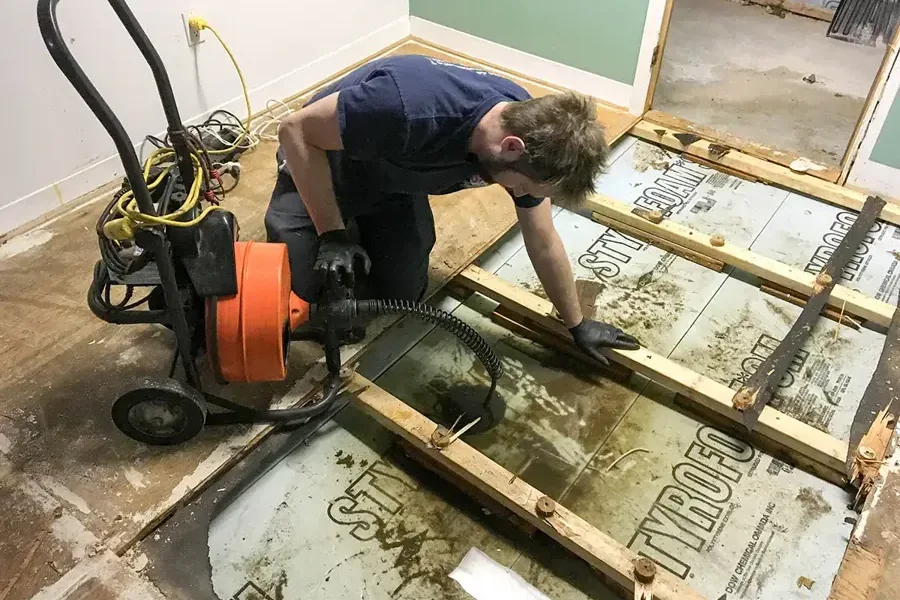
La Habra Heights sits in the Puente Hills on large lots, and most of its homes use septic systems instead of a city sewer. That changes what a backup means, who gets called and what the cleanup has to deal with.
Key takeaways
- A 2012 watershed plan counted about 112 properties with municipal sewer access, and the remaining homes use septic systems.
- Any sewage that comes up through a drain is contaminated water and is not cleaned with household products.
- Stop using water in the house, keep people out of the wet room and bring in both a septic contractor and a restoration team.
- City septic rules cover remodel checks, evaluation of older systems and the duty to connect to a close public sewer when a system fails.
- Porous materials that touched sewage are usually removed, not dried.
Septic first, sewer second in La Habra Heights
The city's watershed management plan says about 112 properties had access to the municipal sewer. The rest of the housing units use septic systems, because the hillside terrain makes a city sewer too costly for most homes.
So when a drain backs up in La Habra Heights, the likelier question is what is happening in the tank and leach field, not in a street main.
The city contracts with the Los Angeles County Department of Public Works Sewer Maintenance Division for sewer and septic inspections.
The other possibility is a backup in one of the sewer connected properties. That has a different cause, usually a blockage in the pipe that carries waste from the house toward the sewer.
The cleanup is the same either way, because Category 3 water is Category 3 water wherever it started. A plumber with a camera can show whether the blockage sits inside the property or further along.
Signs a drain is backing up
Inside the house
A backup rarely arrives without a warning. The lowest drains in the house show it first.
- Slow drains in several fixtures at once
- Gurgling from a toilet or tub when another fixture runs
- Dark water or sewage at a shower drain or floor drain
- A sewage smell that comes and goes
Outside the house
A wet, spongy or foul smelling patch in the yard over the tank or the leach field is another sign. So is lush, unusually green grass in one stripe.
What to do in the first hour
The fastest way to make a backup worse is to keep running water. Every shower and every load of laundry pushes more into the system.
Tell the septic contractor which fixtures backed up, which one went first and when the water use stopped. Those details help narrow the cause down to the tank, the outlet or the leach field.
- Stop using sinks, showers, toilets and the washing machine.
- Keep children, pets and visitors out of the affected room.
- Do not try to mop sewage with towels or a household vacuum.
- Photograph the damage and note which fixtures were affected.
- Bring in a septic contractor for the system and a restoration team for the house.
Why sewage is treated as contaminated water
Water that carries sewage is called Category 3, the most contaminated class. It can hold bacteria and viruses, and it soaks into anything absorbent.
Crews working with it wear protective gear, contain the room and handle the material according to that class, not as ordinary wet cleanup.
The city's own flood information makes a related point about floodwater, saying it may carry contaminants and that protective gear is wise during cleanup.
How the cleanup works
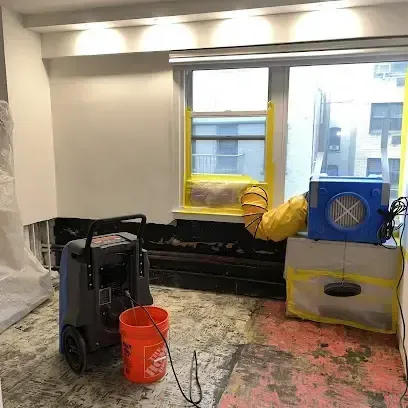
The sewage backup cleanup team starts by containing the affected room so contamination does not spread through the house.
Next comes water extraction with equipment that handles solids and liquids, followed by removal of anything porous that was touched.
Hillside lots can make access tight. Crews plan hose runs and equipment placement before work begins, so contaminated water never crosses a clean room on its way out.
For more on how local crews handle sewage losses, see water damage restoration in La Habra Heights.
- Carpet, pad and wet drywall are cut out and bagged.
- Hard surfaces are cleaned and treated with disinfectant after the gross material is gone.
- Dehumidifiers and air movers dry the room and the cavities behind it.
- Moisture readings confirm the structure is dry before anything is rebuilt.
City and county septic rules worth knowing
The city's septic page lists a few rules that affect what happens after a failure. They are worth reading before a contractor starts a repair.
A maintained leach field or seepage pit can last 30 years or more, which is why age comes up in the rules.
- Remodel plans go to the county Environmental Health Division.
- An existing system must be evaluated by a qualified septic contractor when plans show it is older than 15 years, the plans do not match the house or no plans exist.
- If a public sewer is close enough under the county rule, no septic repair permit is issued and the owner connects to the sewer when the septic fails.
Keeping a septic system healthy after a backup
A septic contractor can say whether the tank needs pumping, the outlet is blocked or the leach field is struggling. After the repair, a few habits lower the odds of a repeat.
The city's rule that older systems be evaluated exists for a reason. A system near the end of its life gives fewer warnings, and a backup is often the first one.
- Follow the pumping schedule the contractor recommends.
- Spread laundry loads across the week instead of running several in a row.
- Keep grease, wipes and paper towels out of drains and toilets.
- Keep vehicles and heavy equipment off the tank and the leach field.
- Keep the ground over the leach field planted with grass, not deep rooted trees.
Questions
How do I know if my home is on septic or sewer?
In the 2012 watershed plan only about 112 properties had sewer access, so septic is the likelier answer. The city and the county sewer maintenance division, which handles sewer and septic inspections for the city, can confirm a specific address.
Does a backup mean the septic tank has failed?
Not always. A tank that needs pumping, a blocked pipe or a struggling leach field can all cause one. A septic contractor finds the cause.
Can the water be dried instead of removed?
Water that carried sewage is not simply dried. Porous materials that soaked it up are removed, and hard surfaces are cleaned and treated before drying starts.
Is sewage in a house dangerous?
It can be. Sewage can carry bacteria and viruses, so people and pets stay out of the room and the cleanup is done in protective gear.
Should I wait for the septic contractor before starting cleanup?
No. The two jobs run side by side. The contractor works on the system while the restoration team contains and cleans the house.
Does the city require anything before a septic repair?
Remodels go to the county Environmental Health Division, and older or undocumented systems must be evaluated by a qualified septic contractor. If a public sewer is close enough under the county rule, no repair permit is issued and the owner connects to the sewer.