A city redevelopment document says most multifamily units in Old Town Placentia sit on second floors above shops along Santa Fe Avenue and Bradford Avenue. That layout puts a kitchen, a bathroom or a washing machine directly over someone else's business.
Key takeaways
- Most multifamily units in Old Town sit above shops along Santa Fe Avenue and Bradford Avenue, so a leak upstairs usually lands in a shop below.
- The source is almost always inside the apartment, so the upstairs tenant and the landlord need to hear about it right away.
- The shop ceiling and the floor structure above it are one wet system and are dried together.
- Photos, a list of damaged stock and a note of who was told and when make every later step easier.
- Phased drying can keep part of a shop open while the wet section is handled.
Why Old Town leaks cross the ceiling
In a building with a shop below and an apartment above, one floor assembly separates two households. The joists, the subfloor and the shop ceiling are shared, and so is whatever water gets into them.
Old Town is laid out that way. The city's district plan describes an L shaped district along Bradford Avenue and Santa Fe Avenue, and the housing in it mostly sits over storefronts.
Water takes the easiest path down. It soaks the apartment floor, drips through ceiling cracks and fixtures, and can run along framing to a spot far from where it started.
Where upstairs water comes from
Sources inside the apartment
Most upstairs leaks begin with something that holds or carries water.
- A bathroom supply pipe, drain or toilet connection
- A kitchen sink, dishwasher hose or ice maker pipe
- A washing machine hose that splits or pops off
- A water heater or an air conditioner drain that backs up
Sources above the shop that are not the apartment
Not every ceiling stain comes from the unit overhead. A roof leak, a pipe in the wall or a rooftop unit can wet the same ceiling, so the first job is finding the real source before anyone assumes.
First steps for the shop owner
The goal in the opening stretch is to stop more water, protect what can be protected and get the right people moving. Shop owners can handle most of it from the sales floor.
- Ask the upstairs tenant or the landlord to shut the water off at the source or the main valve.
- Move stock, paper goods and electronics away from the wet ceiling and cover what cannot be moved.
- Switch off power to wet light fixtures and outlets at the panel only if the panel is dry and safe to reach.
- Photograph the ceiling, the floor and every damaged item before cleanup begins.
- Bring in a restoration team that handles commercial water damage and can inspect the ceiling above the shop.
What a wet ceiling puts at risk in a shop
A leak from above rarely harms only the ceiling. It drips onto whatever sits below, and the damage list grows quickly.
Moving stock out of the drip zone early costs little and saves a great deal. Items that are already wet are photographed and listed before anyone dries or discards them.
- Paper goods, packaging and fabric, which wick water upward
- Registers, computers and lighting
- Wood fixtures, shelving and counters
- Flooring, especially wood, laminate and carpet tiles
- Painted or papered walls that were finished recently
Drying the floor and the ceiling as one system
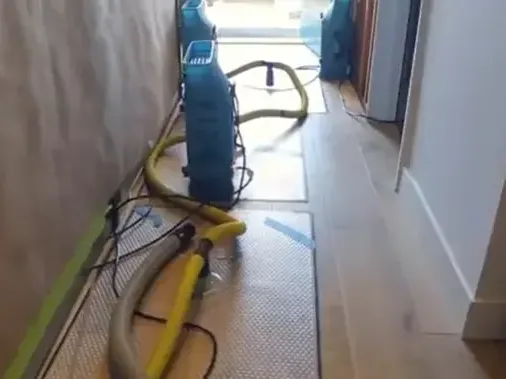
A shop ceiling can look fine on the surface while the cavity above it stays wet. The team checks the ceiling, the floor above it and the wall tops with a moisture meter and a thermal camera, then decides what has to open.
Older shops carry a blend of materials: plaster or drywall, aged framing, several coats of paint and flooring patched over the years. Each reacts differently to water, which is why readings drive the plan.
A plaster ceiling and a drywall ceiling in the same shop can need very different handling.
Wet ceiling drywall and insulation usually come down, which lets air reach the joists and the underside of the apartment floor. That cavity is where ceiling leak water damage is won or lost.
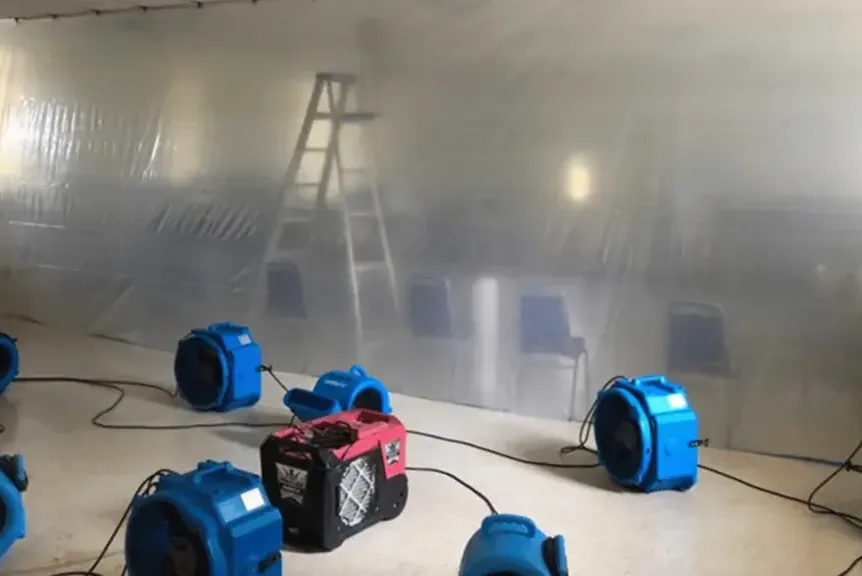
Dehumidifiers and air movers then work the opened space. The structural drying readings tell the crew when the framing is dry enough to close up, and it is worth knowing that mold can start within 24 to 48 hours of a soaking.
Keeping a shop open during the work
Closing a storefront costs money every day, so the plan often works in phases. The wet section is contained and dried first, while the rest of the space stays in use.
That works best when the owner points out which areas matter most for sales, deliveries and customer access.
- Containment barriers keep dust and humid air away from the open section.
- Equipment is placed so aisles and entrances stay clear.
- Quiet or noisy tasks are scheduled around business hours where possible.
- Stock that is out of the work zone can stay on the shelves.
Landlord, tenant and shop: who needs to know what
Two households and one building owner means three sets of questions. Clear notes at the start save arguments later.
Who repairs what is a matter for the lease and for the owners. The restoration team documents the damage, the moisture readings and the work done so the owners have a record to work from.
Shop owners who want more on local response can start with water damage restoration for Old Town and the rest of the city.
- Write down the time the leak was found and the time each person was told.
- Send the landlord or property manager the photos as soon as they are taken, in writing.
- Keep a running list of damaged stock and equipment.
- Ask the upstairs tenant what was running when the water appeared.
Questions
Whose job is it to stop the water?
Whoever can reach the source. The upstairs tenant or the landlord shuts off the supply to the fixture or the apartment, and the shop owner can close the main valve if it is reachable.
Can a shop stay open while the ceiling dries?
Often, yes. The wet section is contained and dried in phases while the rest of the space keeps trading, as long as the space is safe and the ceiling is not sagging.
How far can water from an apartment spread in a shop?
Farther than the stain suggests. Water follows joists and wall tops, so the moisture readings, not the visible mark, decide how much opens up.
What should the photo record include?
Wide shots of each room, close shots of every damaged item, the ceiling stain and any moisture meter readings. Date and time stamps help.
Does an older building take longer to dry?
It can, depending on the materials and how much water got in. The drying team follows the readings and keeps equipment running until the framing reaches a dry reference.
What if the apartment above is empty?
A vacant unit is where leaks run longest, because nobody is there to notice. The landlord or property manager can enter and shut off the supply, and the shop owner should say so as soon as the stain appears.