Structural Drying in Placentia, CA
Pulling the water out is only half the job. The drying team sets air movers and dehumidifiers by the class of damage, then logs readings each day until framing, floors and drywall are dry.
(888) 563-9619Start the structural drying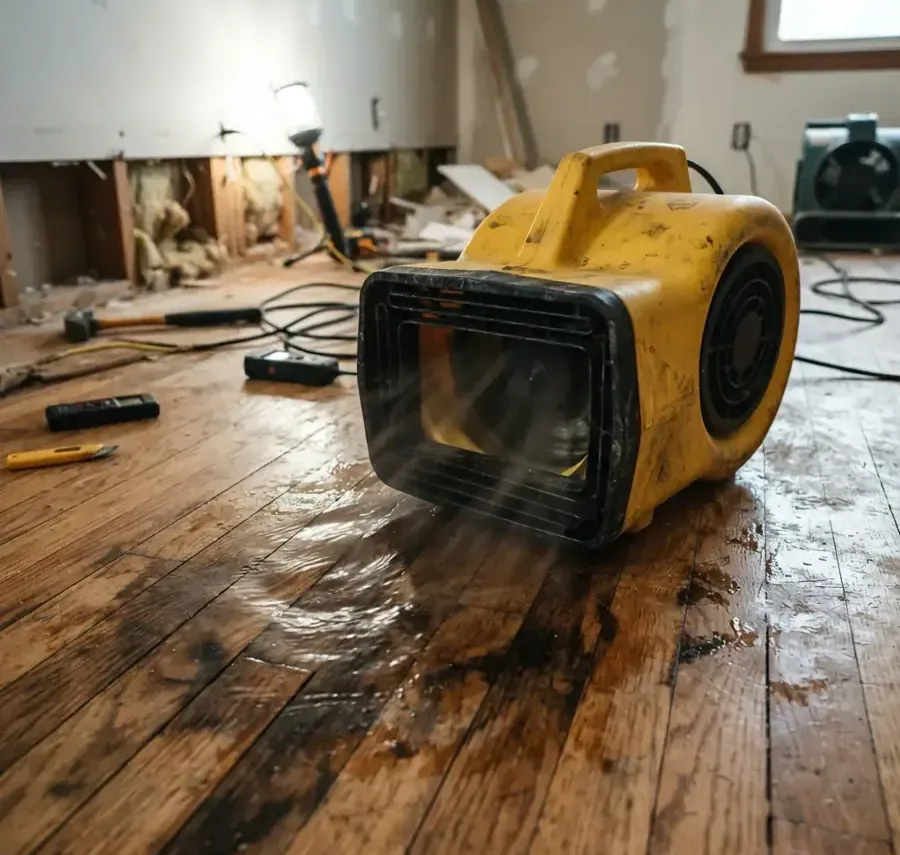
First moves when structural drying starts
- Get a baseline
Meter readings from an unaffected room set the dry goal that wet materials must reach.
- Keep doors shut
Closing the affected room helps the dehumidifier work, so keep exterior doors and windows closed.
- Leave equipment
Do not unplug or move air movers, since the drying plan depends on their placement.
- Expect daily visits
The team returns each day to take readings and adjust the equipment.
How the crew handles structural drying
Classify the loss
The team measures the affected area and materials to decide the class, then calculates the air movers and dehumidifiers needed.
Place the equipment
Air movers are aimed along wet surfaces, LGR dehumidifiers are sized to the room volume, and desiccant units cover dense or cold areas.
Reach the cavities
Wall bottoms and ceiling cavities are dried by injection or small openings, since the air in the room cannot reach inside.
Adjust daily
Each visit brings new readings, and units are moved or removed as materials reach their goals.
What does structural drying cost in Placentia, CA?
Structural drying here typically runs $1,000 to $8,000 or more, set by the class of the loss, the number of rooms and how long equipment must run. Dense materials like slab and hardwood add days.
Class 1 to 2, one area
- Air movers
- LGR dehumidifier
- Daily readings
Class 3, several rooms
- Wall and ceiling drying
- Cavity injection
- Psychrometric logs
Class 4, dense materials
- Desiccant dehumidifiers
- Slab and hardwood drying
- Extended monitoring
Typical ranges, not a quote. The water damage cost calculator gives a planning figure; the firm number follows the on-site moisture map.
Water that is extracted still leaves moisture inside studs, drywall, subfloor and concrete. Structural drying removes it on a measured schedule, so a room can be closed up without leaving a damp spot that grows into a bigger problem.
What the classes mean
The class of a loss tells the team how much equipment the job needs and how long it will run.
- Class 1 for small, low-absorption areas
- Class 2 for whole rooms with wet carpet and walls
- Class 3 for water that came from above
- Class 4 for dense materials like hardwood and concrete
Shared walls and floors
The Census Bureau counts 4,406 housing units in Placentia buildings with two or more units, so drying often has to cross shared walls, ceilings and floors. Readings are taken on both sides of each shared surface.
Equipment placement follows the water, not the property line, and every affected space is logged.
Records that prove it
Psychrometric logs record temperature, humidity and material moisture each day. They show when drying is complete and give the insurance adjuster a record of the whole process.
Equipment comes out only when the final readings reach the dry goal. After a pipe failure, burst pipe water damage often needs this level of drying, and so does commercial water damage.
The structural drying process, start to finish
- 1
Classify
The team measures the area and materials to set the class of the loss.
- 2
Place
Air movers and dehumidifiers go in by the calculated count and position.
- 3
Reach
Injection or small openings dry the cavities that room air cannot reach.
- 4
Verify
Daily readings decide which units stay and which come out.
Structural Drying and Dehumidification across Placentia and nearby towns
Drying crews work across ZIP 92870 and 92871, including multi-unit buildings and houses near Tustin Avenue, Orangethorpe Avenue and State College Boulevard, and the La Jolla and Atwood neighborhoods.
The same service nearby: structural drying and dehumidification in Brea, Yorba Linda, Villa Park.
Water damage restoration in Placentia Every area coveredStructural Drying and Dehumidification questions
Why does drying take days after the water is gone?
Moisture soaks into wood, drywall and concrete, where it leaves slowly. Air movers and dehumidifiers speed that release, and readings show when it is done.
What does the S500 standard cover?
It is the industry standard for professional water damage restoration, covering classes of damage, drying goals and documentation. The team follows it to set up and measure the job.
Can the equipment be turned off at night?
It should run continuously, because humidity rebounds when the dehumidifiers stop. The noise and power draw are the cost of finishing faster.
How is the end of drying decided?
Moisture readings in each material must match the dry reference from an unaffected area. A dry-looking wall does not count until the meter agrees.
Will drying reach a neighbor's unit?
Shared walls and ceilings carry water between units, so affected spaces are metered and dried separately, with readings logged for each.
Does structural drying prevent mold?
Fast, complete drying removes the damp conditions mold needs, which usually take hold within 24 to 48 hours. Skipping steps leaves wet cavities behind.
Walls and floors still wet?
The drying team classifies the loss, places air movers and dehumidifiers to match and logs readings every day until each material reaches its dry goal.