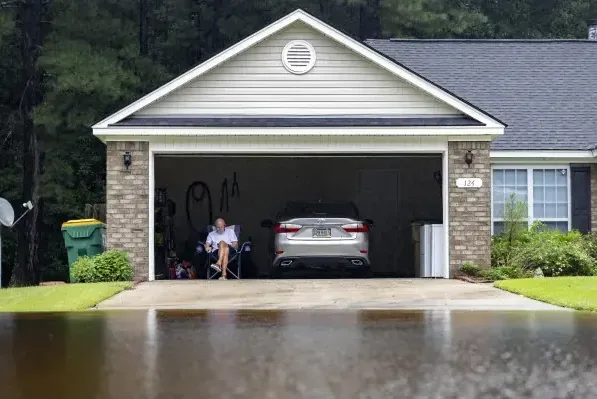
Santiago Creek borders Villa Park on the southeast, and the city's housing plan notes that some properties sit inside designated flood hazard zones. That is the backdrop for any storm that sends water toward a Villa Park door.
Key takeaways
- Santiago Creek borders the city on the southeast, and some properties are inside designated flood hazard zones.
- In the February 1969 flood the damage and evacuations were downstream, in Orange and Santa Ana, and No local homes are named as flooded.
- City storm drains carry rain from the curb to the Lower Santa Ana River watershed, and the water is not treated.
- Storm water that gets into a house is cleaned as contaminated water.
- Extraction comes first, then removal of soaked materials and drying to a measured goal.
Where the creek meets the city's edge
Villa Park is almost completely surrounded by the City of Orange, and Santiago Creek runs along its southeast side. Most of the city's vacant land is the Santiago Creek Recharge Basin and utility easements.
Smith Basin, a vacant parcel of about 17 acres owned by the Orange County Water District, is zoned for flood control and sits partly inside the creek channel. The housing plan calls that channel an important flood control facility.
The city also notes that some properties are inside designated flood hazard zones. Which ones is a question for the flood maps, not for guesses.
What the February 1969 flood showed, and what it did not
What happened
Rain fell almost continuously from January 18 to 25, 1969. A second storm then hit saturated ground, and on February 25 the flood followed.
The Villa Park Dam, a flood control dam on Santiago Creek, filled to capacity for the first time since it was built in 1963. The spillway overflowed at 1:30 p.m. and ran for 36 hours.
Where the damage landed
The water and wastewater hazard mitigation plan records serious erosion downstream in Orange and Santa Ana, along with washed out roads, a railroad bridge and water and sewer pipes. About 2,000 residents of Orange and Santa Ana were evacuated from houses bordering the creek.
No local homes are named among the flooded ones. The lesson for the city is how fast the creek rose, not a list of local losses.
How storm water reaches a house here
Most of the time it is not the creek at all. It is street runoff, backed up at a curb or a low driveway, finding the lowest door.
The city's stormwater page explains that storm drains begin at the curb gutter and exist to carry rainwater out quickly to prevent flooding. All of the city's runoff drains toward the Lower Santa Ana River watershed.
Many homes sit on large lots, and a yard that slopes toward the house carries water to the foundation as easily as away from it. A few inches of grade can matter more than the size of the storm.
- Garage doors and thresholds at the bottom of a sloped driveway
- Sliding doors and patio doors with worn seals
- Block walls and planters that hold water against the house
- Roof runoff from a gutter that is full of debris
Why storm water is cleaned as contaminated water
The city says the water in its storm drains is not treated. That water crosses streets and yards before it reaches a door, so it carries soil, oil and whatever else was on the ground.
Restoration crews class that kind of water as Category 3. It is handled in protective gear, and anything porous that soaked it up is usually removed.
The same rule applies to every storm, whether the water is an inch deep or a trickle under a door. Contaminated water is handled as contaminated water.
- Soil and silt from streets, yards and slopes
- Oil and fuel residue from driveways
- Garden chemicals and fertilizer
- Bacteria carried in from animal waste
How the cleanup works
The storm and flood cleanup process runs in a set order so the structure dries without trapping anything behind it.
Water extraction is first. Pumps and wet vacuums remove standing water, which stops the soaking at once.
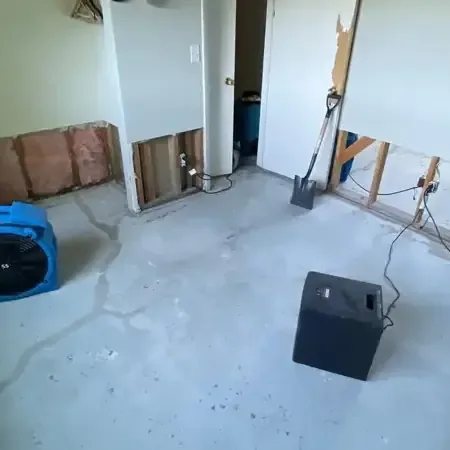
After the water is out, the team sets drying equipment and checks readings at wall bottoms, behind baseboards and under cabinets, where storm water hides. The job ends when those readings match a dry reference, not when the floor looks dry.
- Wet carpet and pad are cut out and removed.
- Baseboards and the bottom of wet drywall come off so the wall cavity can be reached.
- Hard surfaces are cleaned and treated for contamination.
- Dehumidifiers and air movers run until readings reach a dry reference.
Recent Orange County storms
Two recent storms show how wet seasons play out. On March 1, 2023, heavy rain of 2 to 3.85 inches fell across Orange County, the Inland Empire and northern San Diego County, with areas of urban flooding in Orange County.
From February 4 to 8, 2024, a series of storms brought 4 to 10 inches of rain to Orange County and widespread flooding across the region.
Those are county wide figures, not a count of local losses. They are a reminder that a wet season can deliver several inches within days.
- Test gutters and downspouts with a hose before the season.
- Look for low spots along the driveway where water collects.
- Know which door a storm usually pushes water toward.
- Keep sandbags or plastic sheeting where they can be reached quickly.
Before the next storm
Preparation does not have to be elaborate. A few checks before the wet season can keep water off a floor.
FEMA's Flood Map Service Center shows flood zones by address, which is the quickest way to learn where a property sits.
For local help after a storm, see water damage restoration in the city.
- Clear gutters, downspouts and the curb in front of the house.
- Check that the ground slopes away from the foundation and the garage door.
- Move stored items off garage floors and onto shelves.
- Know where the main water valve is and how to turn it.
Questions
Did the 1969 flood damage homes in Villa Park?
Records show serious damage and evacuations downstream in Orange and Santa Ana. No local homes are named among the flooded ones.
Are some properties in a flood zone?
Yes. The city's housing plan says some properties are within designated flood hazard zones. The FEMA Flood Map Service Center shows zones by address.
Where does street runoff go?
The city says all of its rainwater runoff drains into the Lower Santa Ana River watershed, through storm drains that start at the curb gutter.
Is storm water in a house clean enough to just dry?
No. Storm water is treated as contaminated, so porous materials that soaked it up are usually removed and hard surfaces are cleaned before drying.
What comes first after storm water gets into a room?
Extraction. Pulling the standing water off the floor stops it from soaking into carpet, pad and wall bottoms.
Can I use a household wet vacuum on storm water?
It is better not to. Household vacuums are not built for contaminated water and can spread it, while extraction equipment is made for the job.