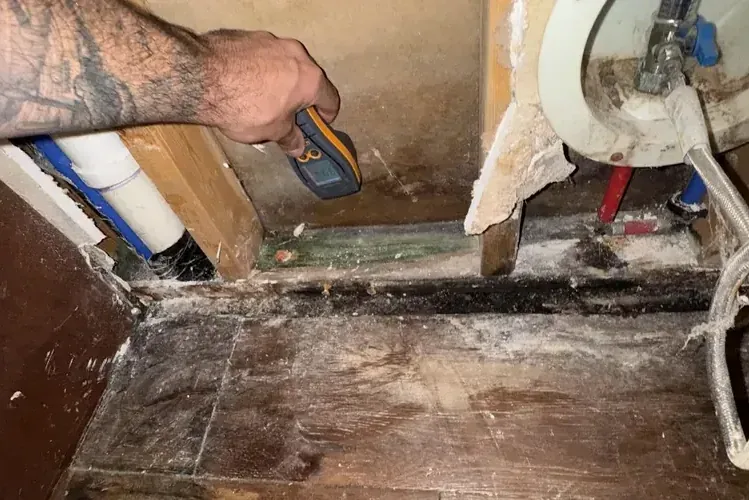
When water appears where it should not, the first practical question is whose pipe it is. In Yorba Linda, the answer depends on which side of the water meter the break sits.
Key takeaways
- The water district maintains the street side of the meter, including the mains in the street.
- The owner maintains the customer side: interior plumbing, the irrigation system and the connection to the meter.
- The pipe that runs from the meter into the house belongs to the owner.
- Some Yorba Linda homes are served by Golden State Water instead, depending on location, so the water bill shows who to call.
- Whichever side broke, a restoration team handles the water that reached the house.
The meter is the dividing point
Yorba Linda Water District draws the boundary at the meter: everything on the street side is the district's, and everything past it is the property owner's.
That sounds simple until water is running across a driveway and nobody can tell which side it came from. Knowing the split ahead of time saves the first confused hour.
The split also changes how much is at stake. A crack on the street side leaves the home's plumbing untouched, while a split on the customer side can be one of several weak spots in the same system.
What belongs to the owner
The customer side starts at the meter and includes more than most owners expect.
None of those parts are visible from the street, which is why owners rarely think about them until a stain or a bill gives the problem away.
- The connection to the meter
- The pipe from the meter into the house
- All interior plumbing, from supply pipes to fixtures and hoses
- The irrigation system, including valves and buried pipe in the yard
What belongs to the district
The street side
The district maintains the street side of the meter, which includes the water mains in the street.
The district asks residents to call at any time for a broken water main, a fire hydrant leak, a break in the service pipe between the meter and the street, or water gushing from a round manhole.
Homes served by Golden State Water
The city says most residents are served by Yorba Linda Water District and some by Golden State Water, depending on where the home sits. Which streets belong to which provider is not something to guess at.
The name on the water bill settles it.
If the leak is on the owner side
A break on the customer side is the owner's to stop, and speed counts. A split supply pipe or a failed hose can put a lot of water into a garage or a wall in a short time.
The same steps apply whether the break is a burst pipe or a slow, hidden leak that finally gives way.
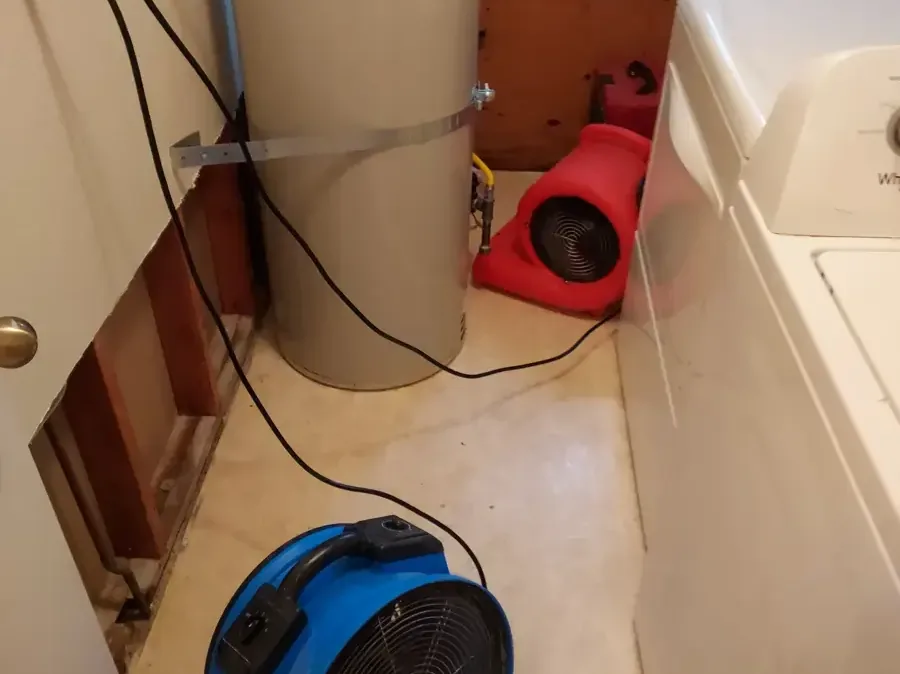
Drying starts as soon as the water is off. The crew checks the floor, the bottoms of the walls and anything stored against them, since water hides in the places where it first landed.
- Shut the main valve at the house if it can be reached safely.
- Turn off power to wet outlets only if the panel is dry and safe to reach.
- Photograph the water, the source and the meter reading.
- Call a plumber for the pipe and a burst pipe water damage team for the water that got in.
- Move furniture, rugs and boxes off wet floors.
If the water comes from the street side
A break between the meter and the street, or in the main itself, is the district's to repair. The first call goes to the district, and the second goes to a restoration team if water has reached the house.
The water may already be in a garage or against a wall by then. Water extraction crews pull it off the floor before it soaks in and check the lower walls with a moisture meter.
- Keep people out of rooms with standing water near outlets.
- Block doorways with towels or sandbags only if it is safe to do so.
- Leave the meter and the street valves to the utility.
- Write down the time the water appeared and the time the district was called.
The irrigation system: the leak nobody hears
Because the irrigation system is on the owner side, so is every buried pipe, valve and sprinkler head in it. A crack underground does not announce itself the way a burst indoor pipe does.
The signs are usually outdoors: a soggy patch of lawn, a low spot that stays wet in dry weather or a bill that climbs in the watering months.
The risk to the house is water traveling toward the foundation, the garage or a low doorway. A leak that runs against a wall for weeks can soak the bottom of the drywall before anyone notices.
- Walk the yard after the system runs and look for pooling or geysers.
- Check the meter with every irrigation zone off.
- Look at the base of exterior walls for dark, damp stucco or swelling trim.
- Have a plumber or irrigation specialist trace any wet spot before it reaches the house.
Why older homes feel the owner side more
The median home here was built in 1984, and the census counts 2,583 homes from the 1960s and 5,932 from the 1970s among its 23,887. Interior pipes in those houses have had decades to wear.
Hoses at the washer, the dishwasher and the water heater age too, and they sit on the owner's side of the meter. A quick check of those connections now and then is cheaper than a flooded laundry room.
Knowing where the main valve is, and testing that it turns, is the cheapest protection of all.
For help after a leak on either side of the meter, see water damage restoration for local homes.
Questions
Who is responsible for the pipe from the meter to my house?
The owner. The district maintains the street side of the meter, and the property owner maintains the customer side, which includes the pipe from the meter into the home.
Who do I call for a broken water main in the street?
The district asks residents to call at any time for a broken water main, a hydrant leak or water gushing from a round manhole. Homes served by Golden State Water call that provider.
How do I know whether my home uses the district or Golden State Water?
The water bill names the provider. The city says most residents are served by the district and some by Golden State Water, depending on location.
Does the owner side include the irrigation system?
Yes. The district lists the irrigation system with interior plumbing and the meter connection as the owner's to maintain.
Who cleans up the water that reaches the house?
A restoration team does the extraction and drying. That is separate from the pipe repair, which belongs to the district or the plumber depending on the side.
Can I shut the water off at the meter?
The safer first move is the main valve at the house. The meter and the street side belong to the district, so leave those to its crews.