Commercial Water Damage in Diamond Bar, CA
A burst pipe or storm leak in a shop, office or apartment building can interrupt tenants and records at once. The restoration team dries in phases, protects what stays open and documents every suite.
(888) 563-9619Plan a phased business dry-out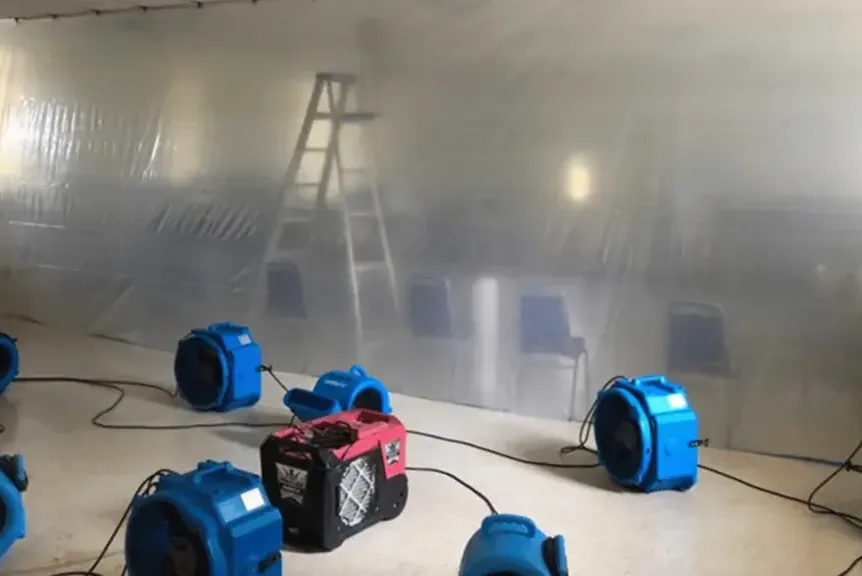
First moves when commercial water damage starts
- Stop the source
Close the valve serving the area, or have the manager shut off the zone.
- Protect records
Move files, electronics and inventory off wet floors and away from dripping ceilings.
- Notify the tenants
Let neighboring suites know so they can check shared walls and ceilings.
- Photograph and call
Document the damage and the source for the insurer, then call to start the plan.
How the crew handles commercial water damage
Walk and scope the loss
The crew meters every suite, hallway and shared wall to find where water traveled, since commercial finishes hide moisture.
Divide into drying zones
Containment and separate equipment per zone keep dry suites dry and let each tenant's space be measured on its own.
Remove what fails
Carpet tile, wet ceiling tile and soaked drywall are removed, with sewage or storm water materials handled under contamination rules.
Document for everyone
Moisture maps, photos and daily logs are produced for each tenant space and the landlord, which helps the insurer follow the loss.
What does commercial water damage cost in Diamond Bar, CA?
Commercial water losses span $3,000 to $40,000 or more, depending on the number of suites, the water category and how much carpet tile, drywall and ceiling has to be removed. Building repairs are separate.
One suite or shop
- Water extracted
- Carpet tile and drywall dried
- Daily readings kept
Several suites
- Phased containment
- Multiple drying zones
- Records kept for each tenant
A large or contaminated loss
- Category 3 procedures
- Desiccant drying
- Complete documentation
Typical ranges, not a quote. The water damage cost calculator gives a planning figure; the firm number follows the on-site moisture map.
Diamond Bar is primarily residential, with shopping centers throughout the city, and 800 housing units sit in buildings of 50 or more units. Water in a commercial or large multi-unit building affects more than one party, so the work is planned around occupancy and records.
How a phased dry-out works
The crew divides the loss into zones, seals off dry areas and dries one section at a time, so tenants outside the affected suite can keep working.
- Containment barriers between wet and dry suites
- Carpet tile lifted and dried or replaced
- Drywall and ceiling tile checked and dried
- Separate readings for each tenant space
Records that tenants and insurers need
Each suite gets its own moisture map, photos and daily readings, so a landlord, a tenant and an insurer can see what was wet and when it was dry. Contaminated water, such as sewage or storm water, is handled under Category 3 procedures with materials removed.
Larger losses continue into structural drying, and a storm source is covered under storm and flash flood cleanup.
Planning around occupancy
Work is scheduled around business hours where possible, and equipment placement is coordinated with the building manager so the property can stay in use.
The commercial water damage process, start to finish
- 1
Scope the loss
Meters and imaging map each suite and shared wall.
- 2
Contain the zones
Barriers and separate equipment divide wet suites from dry ones.
- 3
Dry each zone
Extraction, air movers and dehumidifiers work through each zone in phases.
- 4
Report and release
Records for each tenant are issued as zones reach dry.
Commercial Water Damage across Diamond Bar and nearby towns
Commercial work covers shops, offices and larger multi-unit buildings across the city, including the corridors along Grand Avenue, Golden Springs Drive and Brea Canyon Road, in ZIP codes 91765 and 91789.
The same service nearby: commercial water damage in Brea, La Habra Heights, Yorba Linda.
Water damage restoration in Diamond Bar Every area coveredCommercial Water Damage questions
Can a business stay open during drying?
Often, in part. Containment keeps the wet suite separate, and equipment is placed to leave doorways and work areas clear, though the affected space may have to close.
Who is responsible in a multi-tenant building?
Responsibility depends on the lease, the source of the water and the insurance involved, which the restoration team does not decide. The team dries what it is authorized to dry and documents the rest.
How is carpet tile handled?
Carpet tile is lifted and checked, and clean tiles can often be dried and relaid, while tiles and adhesive that soaked in dirty water are replaced.
What records support a commercial claim?
Moisture maps, photos, daily psychrometric logs and equipment records show what was wet and when it dried. They are organized by suite so each tenant and the landlord have their own set.
Is sewage in a commercial space handled differently?
It follows the same Category 3 procedures as a home, with containment, protective gear and disposal of porous materials before any drying. Occupied neighbors are kept clear of the area.
Protect the tenants and the records
Water in a shared building crosses suites quickly, so zoned containment and early drying limit the loss.