Structural Drying in Diamond Bar, CA
Once the standing water is gone, the structure still holds moisture in framing, drywall and subfloors. The drying team places air movers and dehumidifiers and logs readings until each material reaches its dry standard.
(888) 563-9619Plan the drying for a wet structure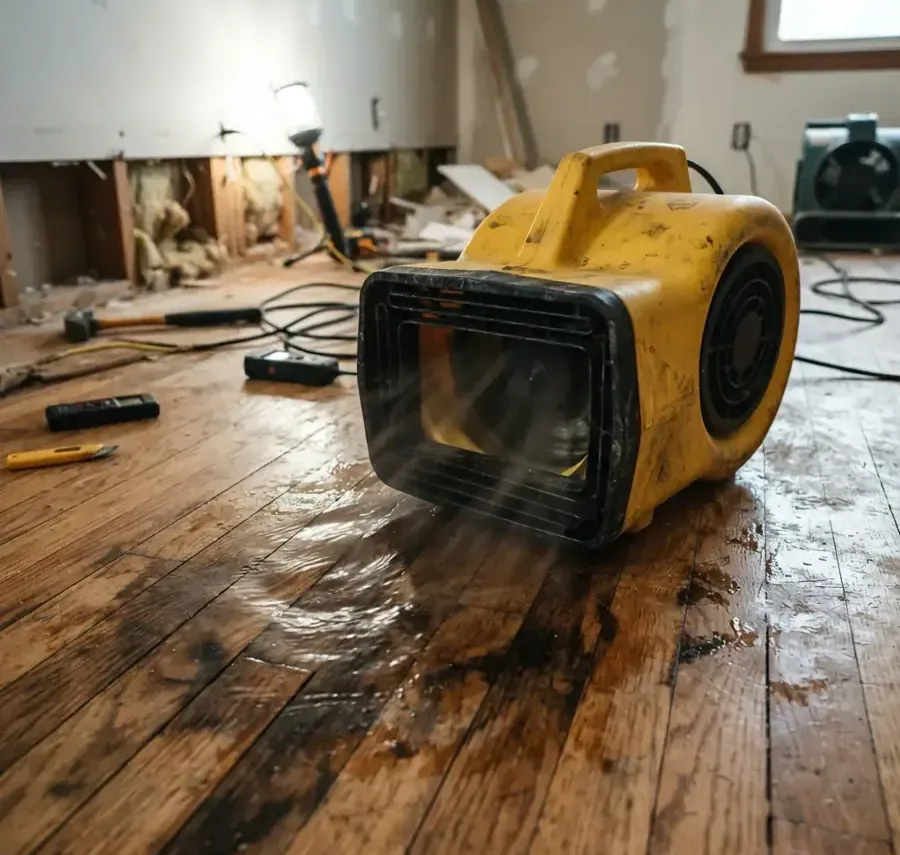
First moves when structural drying starts
- Remove the standing water
Extraction comes first, because dryers cannot dry pooled water.
- Leave walls to the meters
Opening walls before they are measured can spread damp insulation and dust.
- Keep the AC off
Household fans and central air can push damp air into dry rooms, so both stay off.
- Keep doors closed
Closed doors let the dehumidifiers dry one zone at a time, so the drying area stays contained.
How the crew handles structural drying
Classify the loss
The class and category come from meter readings, which fix how much equipment goes in.
Size the equipment
Air movers go along walls and floors and dehumidifiers go in by room volume, so the setup matches the wet area rather than a fixed count.
Reach the hidden damp
Wall cavities and ceiling spaces get injected air or small openings, because closed cavities dry far slower than open surfaces.
Log until finished
Temperature, humidity and moisture readings are recorded each visit, and equipment comes out only when every material reaches its goal.
What does structural drying cost in Diamond Bar, CA?
Structural drying costs $1,000 to $8,000 or more, depending on the water class, the number of rooms and how dense the wet materials are. Moisture logs show when each zone is done.
Light wetting, one area
- Air movers placed
- LGR dehumidifier running
- Daily readings taken
Walls and ceilings, several rooms
- Wall and ceiling drying
- Cavity injection
- Psychrometric records
Dense floors or concrete
- Desiccant units running
- Slab and wood dried
- Extended monitoring
Typical ranges, not a quote. The water damage cost calculator gives a planning figure; the firm number follows the on-site moisture map.
Water spreads past what can be seen. In a city where the median home was built in 1980, wall cavities, joist bays and subfloors can hold moisture long after the carpet looks dry, and structural drying is the step that removes it before anything is closed up.
How the equipment works together
Air movers sweep moisture off wet surfaces, and dehumidifiers pull it out of the air and out of the room, so the two have to run as a balanced system rather than as separate fans.
- LGR dehumidifiers for most wet rooms
- Desiccant units for dense materials and slabs
- Air movers placed along walls and floors
- Injected air for closed wall cavities
Water classes and drying speed
Class 1 and 2 losses involve limited or moderate wet material and dry fastest. Class 3 means water came from above and soaked walls and ceilings, and Class 4 covers dense materials like hardwood and concrete that release moisture slowly and need desiccant drying.
Category matters too, since Category 2 or 3 water changes what stays and what is removed before drying starts.
Shared walls and ceilings
With 2,321 attached homes and 3,064 units in multi-unit buildings, water can cross shared walls and ceilings into more than one home. Drying plans cover each affected unit separately, with its own readings, so every party has a record of when its walls and floors reached dry.
Most structural jobs start with water extraction, and a ceiling source is covered under ceiling leak water damage.
The structural drying process, start to finish
- 1
Classify and plan
Meter readings set the water class and the equipment needed.
- 2
Place the dryers
Air movers and dehumidifiers go in by room and material.
- 3
Reach the cavities
Walls and ceilings are opened or injected where moisture hides.
- 4
Log and remove
Daily readings end when materials reach their goal.
Structural Drying and Dehumidification across Diamond Bar and nearby towns
Structural drying covers houses, attached homes and apartment buildings across the city, from Pantera and Heritage Park to the Summitridge and Sycamore Canyon areas, in ZIP codes 91765 and 91789.
The same service nearby: structural drying and dehumidification in Brea, La Habra Heights, Yorba Linda.
Water damage restoration in Diamond Bar Every area coveredStructural Drying and Dehumidification questions
Why do dryers run for days after the water is gone?
Extraction removes liquid water, while the moisture inside framing, drywall and subfloors leaves slowly as vapor. The equipment stays until readings show those materials are back to normal.
What is the difference between LGR and desiccant units?
LGR dehumidifiers work well in warm, wet rooms. Desiccant units use a drying wheel that works on dense materials like hardwood and concrete, so they are added for those jobs.
Is the noise and electricity use normal?
Air movers and dehumidifiers are loud and draw power, and that is normal for a drying job. The crew sets them to run only as long as the readings need.
Can structural drying be skipped if the surface looks dry?
Skipping it risks hidden dampness in walls and subfloors, which can stain, swell materials and encourage mold. Readings, not appearance, decide whether the structure is dry.
How do apartments and attached homes handle drying?
Each affected unit is dried and logged on its own, since water can cross shared walls and ceilings. Equipment placement is coordinated with the building so neighbors are disturbed as little as possible.
Dry what the eye cannot see
Moisture left in framing and subfloors causes damage long after the surface looks dry, so readings should confirm every layer before repairs begin.