Ceiling Leak Water Damage in Villa Park, CA
A stained or sagging ceiling means water is already trapped above it. The crew finds the source, opens the wet section and dries the joists and the room beneath so the damage stops growing.
(888) 563-9619Describe the stain or sag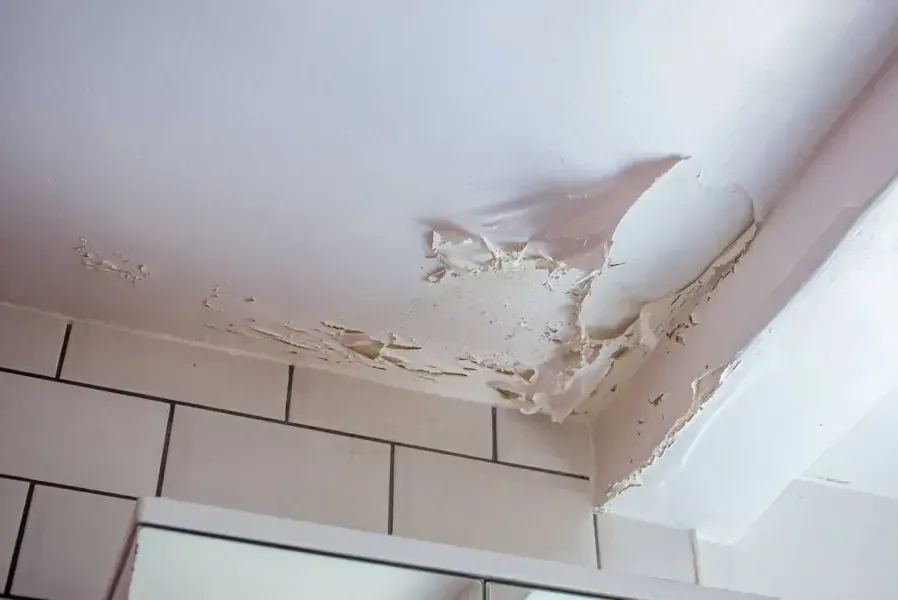
First moves when ceiling leak water damage starts
- Drain the bulge
Place a bucket and puncture a bulging ceiling at its lowest point to release the water.
- Clear the room below
Move furniture and electronics out from under the stain.
- Switch off the lights
Turn off ceiling lights and fans near the wet area until a check shows they are safe.
- Photograph first
Photograph the stain and any drips before cutting, and mark the edge in pencil.
How the crew handles ceiling leak water damage
Find the real source
Thermal imaging and meters follow water along the joists to the leak, which often sits well away from the visible stain.
Cut back to dry material
Wet drywall and insulation are removed until the cut edges read dry, so no wet board is left to feed the damage.
Dry the joist bays
Air movers and a dehumidifier work on the open ceiling and framing, then readings show when the bays are dry.
Check the room beneath
Carpet, pad and wall tops under the leak are read and dried, since drips reach them long before a stain shows.
What does ceiling leak water damage cost in Villa Park, CA?
Ceiling leak drying costs $1,000 to $2,500 for a small wet area, $2,500 to $4,500 when a section comes down, and $4,500 to $7,000 or more for a long leak or contaminated water.
Small wet area
- Thermal scan
- Ceiling dried in place
- Joist moisture readings
Ceiling section removed
- Drywall and insulation out
- Joist bay drying
- Room beneath dried
Long leak or Category 2 to 3
- Larger removal
- Antimicrobial treatment
- Subfloor and wall drying
Typical ranges, not a quote. The water damage cost calculator gives a planning figure; the firm number follows the on-site moisture map.
A ceiling stain is the end of a longer story. Water has already crossed the insulation and the drywall, and it may still be sitting on top of the board. Because most homes here are detached, the source is nearly always in the same house, either the roof or a pipe, and not a neighbor's unit above.
Finding the source
The stain rarely sits under the leak. Water travels along joists before it drops, so the team scans a wide area:
- Roof leaks show up after rain and fade as the weather dries
- Plumbing leaks keep growing in dry weather too
- Bathroom and laundry fixtures above are checked
- Attic ducts and tanks are checked for drips
Opening the ceiling safely
A bulging ceiling is released at its lowest point to drain it. Soaked drywall and insulation are cut back to dry material, then air movers and a dehumidifier dry the joist bays. The ceiling leak service details show the method.
After the drying
The room beneath is dried too, since drips soak carpet and wall tops and can leave floors damp for days. The roof leak drying page helps when rain was the source, and a plumber handles any pipe repair.
The ceiling leak water damage process, start to finish
- 1
Scan the ceiling
A thermal camera outlines the wet area and the path of the water.
- 2
Open the wet section
Drywall and insulation are cut back to dry edges.
- 3
Dry the framing
Equipment runs on the joists and room while readings fall.
- 4
Verify and rebuild
Dry readings are logged before the ceiling is closed and painted.
Ceiling Leak Water Damage across Villa Park and nearby towns
Ceiling leak drying reaches ZIP code 92861, from single-family houses around The Orchards, Santiago Boulevard and Wanda Road to offices and shops in the Town Center.
The same service nearby: ceiling leak water damage in Brea, Placentia, Yorba Linda.
Water damage restoration in Villa Park Every area coveredCeiling Leak Water Damage questions
Why is the stain not under the leak?
Water runs along joists and insulation before it drops, so the stain often sits some distance from the source. A thermal camera traces the path.
Does the whole ceiling have to come down?
Usually only the wet section. The cut follows dry readings, so the rest of the ceiling stays in place.
Can a ceiling leak cause mold?
It can within 24 to 48 hours if the material stays wet, which is why drying starts as soon as the source is stopped.
Who fixes the source of the leak?
A roofer or plumber repairs the source, depending on whether rain or a pipe caused it. The drying team handles the wet materials.
Is a neighbor responsible for a leak above?
Most homes here are detached single-family houses, so the source is usually the same property, not a neighbor above.
Does insurance cover ceiling damage?
Often when the cause was sudden. Photos, readings and a written scope help the adjuster understand the cause and the extent.
Stop the ceiling damage from growing
Trapped water keeps spreading through drywall and insulation until it is opened and dried. The drying team can find the source and plan the smallest opening that works.