Hardwood Floor Water Damage in Placentia, CA
Wet hardwood swells, cups and cracks quickly, and the damage worsens as moisture sits beneath the boards. The drying team uses floor mats and meters to pull the water out and save as much wood as possible.
(888) 563-9619Save the wood floor now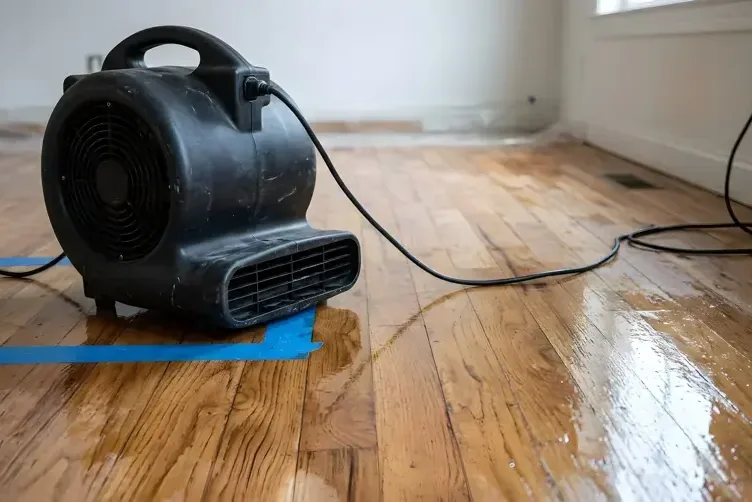
First moves when hardwood floor water damage starts
- Soak it up
Remove standing water at once and wipe the surface, because boards absorb at the seams.
- Lift the rugs
Take rugs, mats and furniture off the floor.
- Skip the heat
Do not use a heat gun or turn the heat up high, since fast drying can crack boards.
- Call early
Contact a drying team quickly, because cupping is easiest to reverse early.
How the crew handles hardwood floor water damage
Meter the floor
A wood meter is run across the boards and the subfloor to find which areas hold water and how much.
Set the mats
Drying mats are laid in sections over the wet area and connected to a unit that pulls moisture upward.
Control the room
Baseboards come off, and a dehumidifier or desiccant unit keeps humidity low enough for the wood to release water.
Lift selectively
Boards that have buckled or cannot dry are lifted, so the rest can stay and the subfloor can be reached.
What does hardwood floor water damage cost in Placentia, CA?
Hardwood floor water damage here typically runs $1,200 to $6,000 or more, with refinishing or replacement billed apart. The size of the wet area, how long the boards stayed wet and what lies beneath them set the number.
One room
- Floor drying mats
- Wood meter readings
- Dehumidifier
Several rooms
- Mats in sections
- Desiccant drying
- Baseboards removed
Floor over a wet slab
- Slab and wood dried together
- Some boards lifted
- Extended monitoring
Typical ranges, not a quote. The water damage cost calculator gives a planning figure; the firm number follows the on-site moisture map.
Hardwood absorbs water through its edges and underside, so the damage often starts below the surface. Boards that look fine on day one can cup or buckle by the end of the week if the moisture is not pulled out.
Cupping, crowning and buckling
Cupping means the board edges rise as the underside stays wetter than the top. Buckling is more serious, lifting boards off the subfloor. Early drying can reverse cupping, but buckling often means replacement.
- Boards with raised edges
- Gaps or dark lines at seams
- A musty smell from the floor
- A hollow or spongy feel underfoot
Old floors, new floors
Placentia's median home was built in 1976, and the Census Bureau counts 515 units from 1939 or earlier along with 242 from 2020 or later. What lies under the surface varies from house to house, so the first step is identifying the flooring.
Kitchen and laundry leaks reach wood most often, as covered under appliance leak water damage.
How the drying works
Drying mats pull moisture upward through the boards while a dehumidifier lowers the air's humidity. A desiccant unit takes over when the wood is thick or the room stays humid.
The crew checks the subfloor too, because water trapped there keeps feeding the boards from below. Broader equipment choices are explained under structural drying.
The hardwood floor water damage process, start to finish
- 1
Meter
A wood meter maps wet boards and the subfloor beneath them.
- 2
Cover
Drying mats go over the wet area in sections and pull moisture upward.
- 3
Control
A dehumidifier holds the room's humidity low while baseboards come off.
- 4
Check
Daily readings show when the boards are flat and the subfloor is dry.
Hardwood Floor Water Damage across Placentia and nearby towns
Floor drying covers ZIP 92870 and 92871, including houses around Whitten Community Center, along Melrose Street and off Kraemer Boulevard and Lakeview Avenue, plus the Atwood and La Jolla neighborhoods.
The same service nearby: hardwood floor water damage in Brea, Yorba Linda, Villa Park.
Water damage restoration in Placentia Every area coveredHardwood Floor Water Damage questions
Can cupped hardwood be saved?
Often, when it is dried quickly. Cupping can ease as the moisture equalizes, though some floors need sanding afterward, and buckled boards usually have to be replaced.
Should the floor be sanded right away?
No. Sanding wet wood locks in damage, so the floor is dried to a stable reading first and any refinishing comes after.
What about a wood floor over concrete?
Concrete holds water longer than the boards do, so it is metered and dried along with them. Wet concrete that is ignored can keep feeding the wood.
Does insurance cover hardwood damage?
Sudden leaks and overflows are often covered, while slow seepage may not be. Photos, meter readings and invoices support the claim, and refinishing may be part of it.
How long does hardwood take to dry?
Drying commonly takes 5 to 10 days, longer for thick boards or a wet slab. Readings, not the calendar, decide.
Why can a floor look dry but still be wet?
The surface dries first while the underside and subfloor stay wet. A meter reads moisture inside the wood, which is why it matters more than how the floor looks.
Wet hardwood to rescue?
The drying team sets mats, controls the humidity and lifts only the boards that cannot recover, so the rest of the floor can be saved.