Structural Drying & Dehumidification in La Habra Heights, CA
Walls, floors and framing hold water long after the surface looks dry. Air movers and dehumidifiers pull it out, and daily readings decide when the equipment can leave.
(888) 563-9619Start drying the walls and floors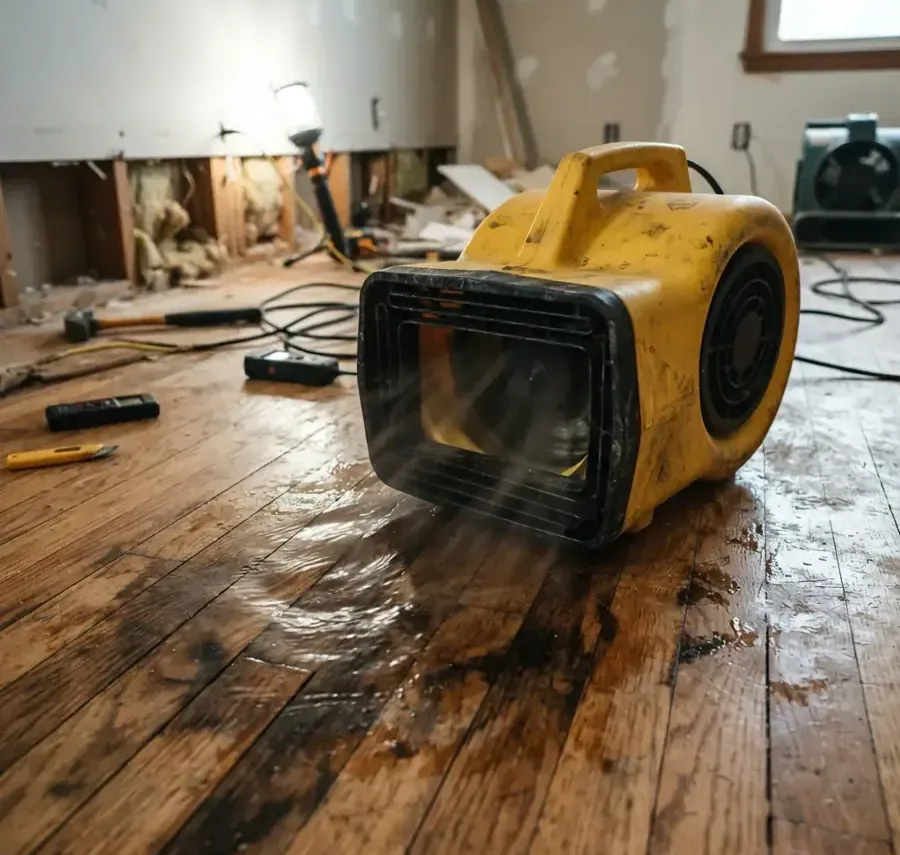
First moves when structural drying starts
- Keep the doors closed
Closed rooms let dehumidifiers work on a smaller volume of air.
- Leave the equipment running
Stopping the machines early leaves moisture in the framing.
- Move belongings out
Clear the wet room so air can reach the walls and floors.
- Read the logs
Ask for the readings on each visit, since they show the drying trend.
How the crew handles structural drying
Classify the loss
The water source and the materials decide the category and class, which set the equipment and the schedule.
Place the equipment
Air movers and dehumidifiers go where the meters show moisture, not in a fixed pattern around the room.
Measure every visit
Moisture meters and a psychrometer record material and air readings, and the equipment is adjusted to match.
Remove it at dry
Equipment leaves when every material reaches its dry reference, and the logs stay on file.
What does structural drying cost in La Habra Heights, CA?
Structural drying typically costs $1,000 to $8,000 or more. One area with light moisture sits low, and Class 4 work on dense materials with extended monitoring reaches the top.
Class 1 to 2, one area
- Air movers
- LGR dehumidifier
- Daily readings
Class 3, several rooms
- Wall and ceiling drying
- Cavity injection
- Psychrometric logs
Class 4, dense materials
- Desiccant dehumidifiers
- Slab and hardwood drying
- Extended monitoring
Typical ranges, not a quote. The water damage cost calculator gives a planning figure; the firm number follows the on-site moisture map.
Extraction removes the liquid, but moisture remains inside framing, drywall and concrete, and that moisture is what drying equipment is for. The city's Watershed Management Program says Puente Hills bedrock retains water and can expand when saturated, which is a reminder that hillside ground holds on to wet.
How drying works
Drying follows physics, not a fixed formula, and the equipment mix changes with the materials and the room.
- Air movers push dry air across wet surfaces
- LGR dehumidifiers pull moisture from the air
- Desiccant units handle dense materials
- Injection mats dry closed wall cavities
Why hillside lots can dry slowly
Where the ground around a house stays wet, lower walls and floors can keep taking moisture back in, so readings may flatten before the structure is truly dry. The crew keeps measuring instead of assuming the job is done.
Dense materials such as concrete and hardwood dry more slowly than drywall, which is why they get their own targets.
Knowing when it is dry
The standard is the dry reference reading for each material, taken on each visit. Equipment comes out only when walls, floors and framing meet it, and the logs are kept for the file and for any claim.
Extraction comes first through water extraction, and flooring jobs are covered in hardwood floor water damage.
The structural drying process, start to finish
- 1
Map the moisture
Meters and thermal imaging locate wet framing, drywall and floors.
- 2
Set the equipment
Air movers and dehumidifiers are placed to follow the wet areas.
- 3
Monitor daily
Material and air readings are logged on each visit.
- 4
Confirm dry
Equipment comes out only when every material reaches its dry reference.
Structural Drying and Dehumidification across La Habra Heights and nearby towns
Structural drying covers ZIP 90631 and homes along Hacienda Road, East Road, West Skyline Drive and Casalero Drive, from the Subtropic Farms area to Avocado Crest and the roads between.
The same service nearby: structural drying and dehumidification in Brea, Placentia, Diamond Bar.
Water damage restoration in La Habra Heights Every area coveredStructural Drying and Dehumidification questions
How long does structural drying take?
Three to five days is common for a room or two. Dense materials like concrete or hardwood take longer, and readings decide the finish.
Why do machines run all day and night?
Drying is steady work, and stopping lets moisture return to the air from materials that are still wet. Running through the night keeps the humidity low.
Will drying raise the electric bill?
Yes, somewhat, since dehumidifiers and air movers draw power. The cost of running them is far smaller than the damage from leaving moisture behind.
Can walls be dried without opening them?
Often. Injection mats push dry air into closed wall cavities through small holes, and only walls that stay wet are opened. The holes are patched afterward.
What do the daily readings show?
They show moisture content in each material and humidity in the air, so the trend toward dry can be tracked and proven.
Dry walls need measured drying
Moisture left in framing and drywall causes trouble later. The drying team places equipment by meter readings and tracks the trend to dry.