Structural Drying in Yorba Linda, CA
Structural drying follows the readings, not the clock, with air movers, LGR and desiccant dehumidifiers and daily logs working until every wall, floor and framing member reaches its dry goal.
(888) 563-9619Set up the dehumidifiers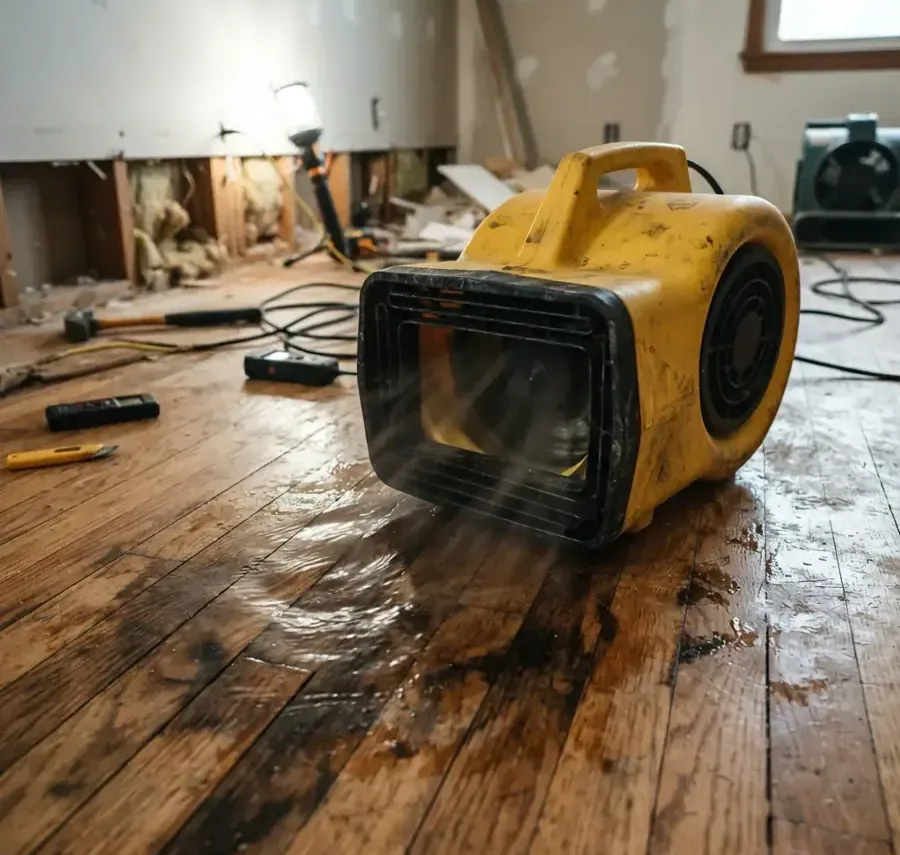
First moves when structural drying starts
- Keep the room closed
Close doors and windows in the wet area so dehumidifiers can lower the humidity.
- Leave the equipment on
Let the air movers and dehumidifiers run, and do not shut them off to save power.
- Hold the thermostat
Keep the home warm and avoid opening wet cavities yourself.
- Keep the log
Photos, readings and equipment notes build the record the adjuster will ask for.
How the crew handles structural drying
A plan from the readings
Moisture meters, a thermal camera and humidity readings set the number of air movers and dehumidifiers and where each one sits.
Walls and ceilings
Wall cavities are dried with injection hoses or small openings, and ceilings are dried from above and below, so closed spaces do not stay wet.
Floors and dense materials
Subfloor, hardwood, tile and slab dry slower than drywall, so mats and desiccant units run longer on those materials.
Daily checks
Each visit records temperature, humidity and moisture readings, and equipment is moved or removed as areas reach their goals.
What does structural drying cost in Yorba Linda, CA?
Structural drying usually runs between $1,000 and $8,000 or more, depending on the drying class, how many rooms need equipment and whether dense materials like hardwood or concrete extend the schedule.
Class 1 to 2, one area
- Air movers
- LGR dehumidifier
- Daily readings
Class 3, several rooms
- Wall and ceiling drying
- Cavity injection
- Psychrometric logs
Class 4, dense materials
- Desiccant dehumidifiers
- Slab and hardwood drying
- Extended monitoring
Typical ranges, not a quote. The water damage cost calculator gives a planning figure; the firm number follows the on-site moisture map.
Structural drying is the stage that decides whether a wet building recovers or grows damage later. After the water is removed, air movers, dehumidifiers and sometimes injection systems pull the moisture out of framing, subfloor, concrete and drywall while meters prove the result.
Drying classes in plain terms
Class 1 and 2 losses involve limited or moderately absorbent materials, Class 3 involves water from above that soaked ceilings, walls and floors, and Class 4 involves dense materials such as hardwood, plaster and concrete that need low humidity and patience. The class sets how much equipment a room needs and how long it runs.
Shared walls and floors
With 2,490 housing units in multi unit buildings, drying can cross a wall or floor into the next home, so readings are taken on both sides and the equipment is placed where it reaches the shared structure.
What the equipment does
Each piece of drying equipment has a specific job:
- Air movers sweep moisture off surfaces
- LGR dehumidifiers pull it from the air
- Desiccant units dry dense materials
- Injection hoses reach wall cavities
Water removal comes first, as in water extraction, and wet floors over concrete follow the slab leak water damage approach.
The equipment stays until the readings, not the calendar, say every layer is dry, and the logs are handed over for the claim file.
The structural drying process, start to finish
- 1
Read the room
Temperature, humidity and moisture readings set the plan.
- 2
Place the gear
Air movers, dehumidifiers and injection hoses go where the readings call for them.
- 3
Check each day
Readings repeat daily and the equipment is adjusted.
- 4
Pull the equipment
Gear leaves once every material reaches its dry goal.
Structural Drying and Dehumidification across Yorba Linda and nearby towns
Drying work covers homes and businesses across 92886 and 92887, from Hidden Hills and East Lake Village to Savi Ranch, Imperial Highway and the Yorba Linda Boulevard retail corridor.
The same service nearby: structural drying and dehumidification in Brea, Placentia, Villa Park.
Water damage restoration in Yorba Linda Every area coveredStructural Drying and Dehumidification questions
How is the end of drying decided?
Readings decide it. Each material is compared with a dry reference, and the equipment stays until walls, floors and framing all match it, not a set number of days.
Why are there so many fans and dehumidifiers?
Air movers sweep moisture off surfaces and dehumidifiers pull it from the air, so the count depends on room size, wet area and material, and setups change as materials dry.
Is the drying loud and does it use power?
The equipment is noisy and draws steady power for several days, and it runs overnight because a pause lets moisture settle back into the materials.
Can drying damage the wood or walls?
Controlled drying protects them, while uncontrolled heat can crack boards, so humidity and temperature are logged and equipment is adjusted.
How does a shared wall affect the job?
Moisture can pass into the next unit, so readings are taken on both sides, and the neighbor's walls may need equipment too when the numbers call for it.
Will insurance pay for the drying days?
Equipment days are usually part of a covered water loss, and daily logs and photos show the adjuster why the equipment stayed.
Dry it to a measured goal
Drying that stops at dry to the touch leaves moisture in framing and subfloor, so measured goals, daily logs and repeat readings are what close a water loss for good.